SA¹ú¼Ê´«

© 2026 SA¹ú¼Ê´«Ä±
Play Live Radio
Next Up:
0:00
0:00
0:00 0:00
Available On Air Stations

The Influence You Have: Why We Fail To See Our Power Over Others

Psychologists say we often have a hard time recognizing how much pressure we put on other people when we ask them for something.
Malte Mueller
/
Getty Images/fStop
Psychologists say we often have a hard time recognizing how much pressure we put on other people when we ask them for something.

Think about the last time you asked someone for something. Maybe you were nervous or worried about what the person would think of you. Chances are that you didn't stop to think about the pressure you exerted on that person.

Psychologists say we are often consumed with our own perspective, and fail to see the signs that others are uncomfortable, anxious or afraid. says researchers refer to this phenomenon as an "egocentric bias." This bias may reveal itself when we put others on the spot, like or . It causes us to vastly underestimate the pressures we place on those around us, and it can have all sorts of serious consequences.

In multiple studies, Bohns found that it was easier than people thought to convince others to do something immoral, like

"People would say things like, 'this is wrong,'" she says. And yet, "as much as it was uncomfortable for them to do this unethical thing ... it was way more uncomfortable for them to say no."

This week: the power we exert over others, and the perils of living too much inside our own heads.

Additional Resources:

by Stanley Milgram in Journal of Abnormal Psychology, 1963

by Philip Zimbardo in American Psychologist, 1974

by Francis J. Flynn and Vanessa K. Bohns in Journal of Personality and Social Psychology, 2008

by Stefano DellaVigna, John A. List and Ulrike Malmendier in Quarterly Journal of Economics, 2012

Copyright 2025 NPR
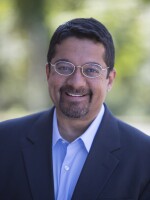
Shankar Vedantam is the host and creator of Hidden Brain. The Hidden Brain podcast receives more than three million downloads per week. The Hidden Brain radio show is distributed by NPR and featured on nearly 400 public radio stations around the United States.
Thomas Lu is an assistant producer for Hidden Brain.He came to NPR in 2017 as an intern for the TED Radio Hour. He has worked with How I Built This, All Things Considered, Weekend Edition and Pop Culture Happy Hour. Before coming to NPR, he was a production intern for StoryCorps.
Tara Boyle is the supervising producer of NPR's Hidden Brain. In this role, Boyle oversees the production of both the Hidden Brain radio show and podcast, providing editorial guidance and support to host Shankar Vedantam and the shows' producers. Boyle also coordinates Shankar's Hidden Brain segments on Morning Edition and other NPR shows, and oversees collaborations with partners both internal and external to NPR. Previously, Boyle spent a decade at WAMU, the NPR station in Washington, D.C. She has reported for The Boston Globe, and began her career in public radio at WBUR in Boston.
Laura Kwerel
[Copyright 2024 NPR]
Rhaina Cohen is an associate producer for the social science show Hidden Brain. She's especially proud of episodes she produced on why sexual assault allegations are now being taken seriously, on obstacles to friendship that men face and why we rehash difficult memories.
More On This Topic