


There has been a surge of global interest in Haitian culture across social media over the past few years, and Haiti鈥檚 participation in this year's FIFA World Cup is supercharging that momentum.
Across industries, Haitians say they are experiencing an undeniable renaissance, gaining the kind of humanization and mainstream visibility that wasn't always afforded to them.
Les Grenadiers, Haiti's national soccer team, is back on the world stage for its first World Cup tournament appearance in over 50 years. While that historic sports feat has rightly dominated the headlines, the culture鈥檚 viral presence has been growing for months.
It鈥檚 driven by everything from the soulful, slow-wine rhythm of and high-tempo music on social media platforms, to high-end designer Stella Jean鈥檚 hand-painted and , alongside a growing global appreciation for Haitian cuisine, fine art, cinema and literature.
The World Cup, which kicks off Thursday, is taking this cultural pride to new heights ahead of Haiti鈥檚 first match against Scotland on June 13.
READ MORE: Diaspora cheers on Haiti at Miami 'home game' ahead of the World Cup
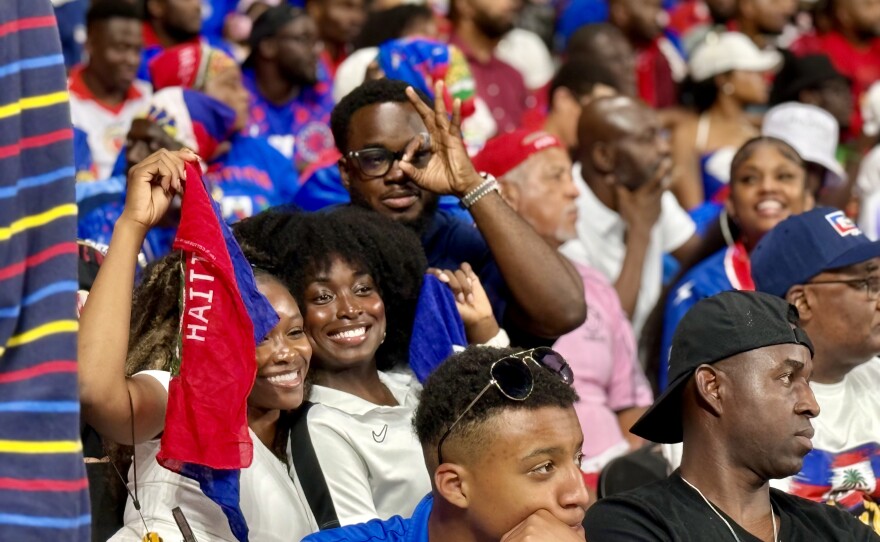
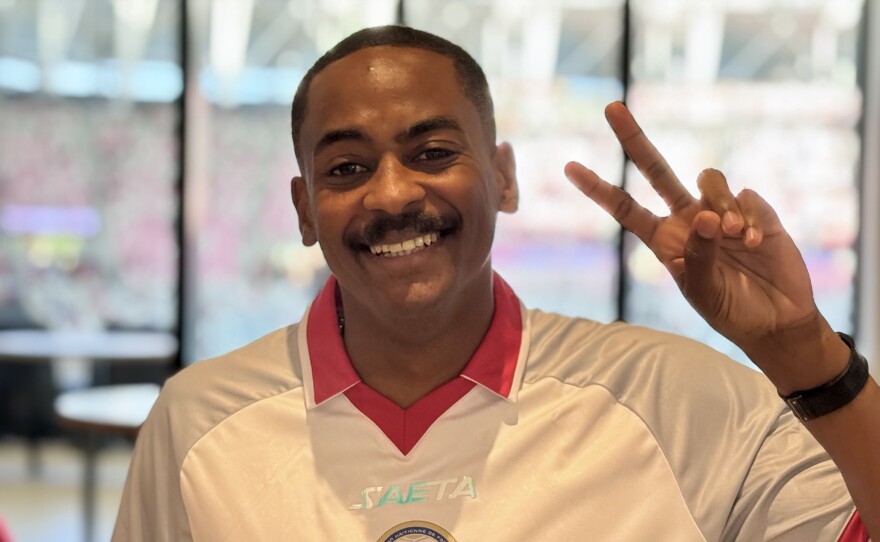
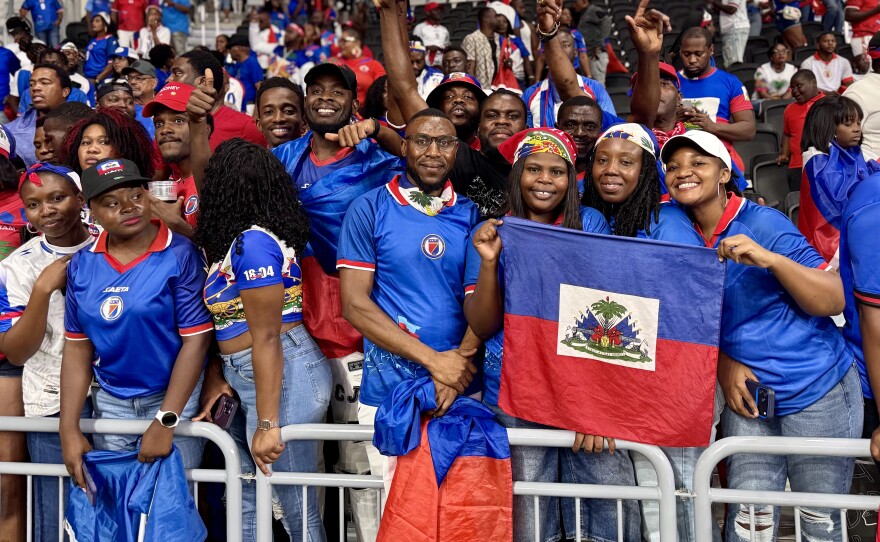
That sense of Haitian renaissance was palpable at a recent sold-out friendly match between Haiti and Peru.
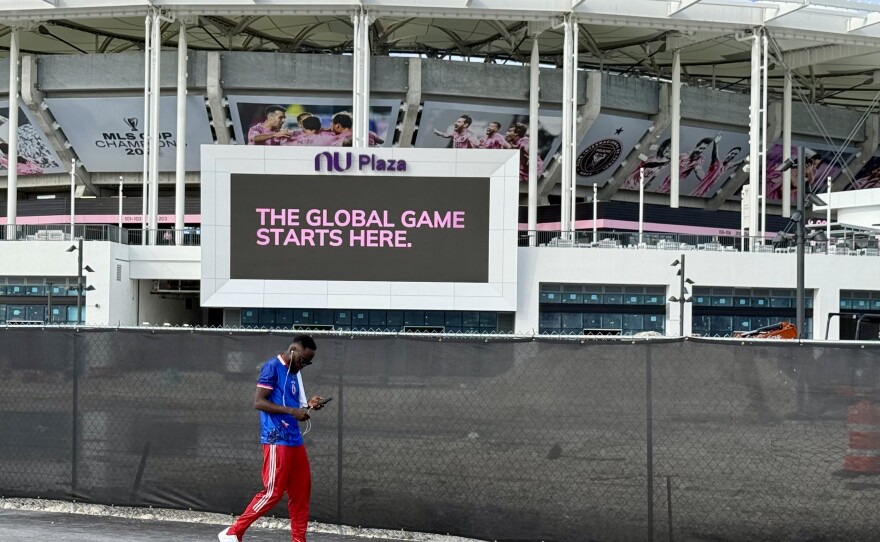
Held at the nearly 30,000-seat Nu Stadium in Miami, members of the Haitian diaspora remarked that the friendly match "felt like a home game."
And for older Haitian generations, the moment carries emotional weight.
鈥淲hen I first came [to the U.S.], it was a shame to be Haitian,鈥� Patrick Casimir told SA国际传谋. He was seven years old when Haiti participated in the World Cup in 1974. Casimir immigrated to South Florida from Haiti in 1991.
He was among many Haitians who faced severe social and legal discrimination 鈥� xenophobia, and structural racism that haunted Haitians for decades.






He noted a slow and distinct cultural shift by 1996 with the rise of the , the iconic hip-hop group founded by Haitians Wyclef Jean and Pras Michel, along with Lauryn Hill, a New Jersey native.
Casimir said it took the group's mainstream success to spark a broader interest in Haitian culture.
"We became proud [of] our country. We became happy to be Haitian,鈥� Casimir said. 鈥淟ike in the '80s, people would be ashamed to say they're Haitian, but not anymore.鈥�
Research across sociology, law, and public health show how Haitian immigrants and their American-born children have faced a "triple-minority" wall of anti-Black racism, xenophobia, and language barriers.
A from the University of Maryland School of Law shows a long history of the Haitian diaspora being singled out, whether through strict exclusionary policy that deny asylum seekers or mainstream media narratives that unfairly paint Haitians, or 鈥�boat people,鈥� as economic and health threats.
Despite a history of social and political marginalization, the newfound interest in Haitian culture has evolved into deep global appreciation. Haiti鈥檚 Konpa music was recently added to list.
Meanwhile, traditional culinary staples like the iconic black mushroom rice, diri djon djon, Haitian seasoning base epis, and the slow-cooked vegetable stew, legim, are receiving widespread praise in upscale culinary spaces.
And the streets are talking. The 'Haitian feast' on Instagram introduced by Orlando-based Haitian cultural storyteller and media personality Ruth Joseph, featuring popular comedian KevOnStage, racked up more than 500,000 views. Showing non-Haitians eating everything from conch to red snapper and various rice offerings, the viral hit is just one example of Haitian cuisine's growing social media presence.
That online curiosity extends to Haiti's national team. Haitian-American and Pompano native Marlon Simeus told SA国际传谋 Haitians aren鈥檛 seeking validation. They鈥檙e demanding respect across industries.
鈥溾�奧e don't need to prove anything to anybody,鈥� Simeus said. 鈥淚t's just good to see that younger generation seeing the pride and just the soccer team 鈥� something we can get behind.鈥�
Haitian creative milestones
Historic milestones from Haitian creatives are breaking ground across mainstream art, academia, and literature, securing major firsts in spaces historically closed to the culture.
Animation and comedy are leading the charge on screen. Haitian-American animator Tracey LaGuerre recently made history with , the first-ever Haitian-American cartoon to premiere on Cartoon Network 鈥攆eaturing popular comedian Jonas Azor (), voicing the father.
Meanwhile, Netflix is showcasing powerhouse diaspora talents like in her hit series Survival of the Thickest, alongside Miami-based comedian , who made a standout run as a top-four finalist on Kevin Hart's Funny AF and recently shared a Miami stage with popular comic
On the live stage, SeJoe 鈥� often called the Haitian Dave Chappelle 鈥� made comedy history by dropping the first-ever full stand-up special on Amazon Prime performed entirely in Haitian Creole.
That pride in Haiti鈥檚 mother tongue is a massive theme right now, reflected everywhere from Duolingo launching a free Haitian Creole course for English speakers, all the way to global film circuits.

In fact, filmmaker Elis茅e Junior St. Preux just made history at the Tribeca Film Festival with The Tropic Sun and His Eyes, the first narrative feature shot entirely in Haiti to premiere at the New York festival.
Simultaneously, the groundbreaking book , by scholars Marlene L. Daut and Kaiama L. Glover, secured the prestigious 2026 Ren茅 Wellek Prize for comparative literature.
When this creative energy hits the streets, look no further than the . What started as a grassroots block party in Haiti by Grammy-winning producer Micha毛l Brun has exploded into an internationally acclaimed cultural phenomenon, now celebrating its upcoming tenth anniversary with a massive showcase scheduled for Boston and New York.
Pride in Haiti鈥檚 own soccer team on the world stage
And now, the World Cup is shining an extra spotlight on all things Haitian, adding the kind of cultural nuance that the diaspora has consistently demanded of mainstream media.
鈥淥ur community needs these stories. We need to be reminded; we need to see who we are as a collective,鈥� said Wanda Tima, the South Florida based entrepreneur and the founder of , one of the largest Haitian-American digital media platforms.
"And we also need to show people that we are not just political unrest. We are not just, you know, little kidnapping stories or what you're hearing coming out of primarily one city.鈥�
Rosa Zephyr, a 22-year-old Haitian-American from Homestead, told SA国际传谋 soccer鈥檚 biggest stage is amplifying the small and big cultural wins for Haiti.
鈥淲e went through so much 鈥� people scrutinize our culture, people scrutinize our food,鈥� Rosa said. 鈥淪o to be able to see everyone present, and especially with FIFA World Cup bringing us closer to each other, it's such an honor.鈥�
Her sister, Sarah Zephyr, also in her early 20s, is cherishing the visibility.
鈥淚t's an amazing feeling to be seen,鈥� Sarah said. 鈥淭he World Cup is giving us the platform that we deserve.鈥�
Haiti and Cura莽ao are just two Caribbean island nations competing in the 48-team FIFA World Cup tournament.
鈥溾�奍t's beautiful to finally have our own team, have something that is yours,鈥� Louis Laurent Jumelle, who is from the Latibonite region in Haiti.
Haitian fans who previously supported the likes of Brazil or Argentina now cannot wait to cheer on their own team, Jumelle said.
鈥淲hen we looked at Brazil, we [Haitian futbol fans] was like, 鈥楾his is the energy and this is the feeling I wanna have when my national team plays.鈥� We're here,鈥� he said. 鈥淪o how do we play with that duality? Well, there's no duality. You know? It's, 'You are Haitian.' We are Haitian. We are one.鈥�
The 2026 World Cup, which kicks off on June 11, will be played across Canada, Mexico and the U.S., with seven games taking place at the Hard Rock Stadium in Miami Gardens.
Haiti was drawn in a difficult group that includes powerhouse Brazil, African champions Morocco and a competitive Scotland side.
South Florida is home to the country's largest Haitian population, but the Haitian presence in cities like Boston, Philadelphia and Atlanta, where the group stage matches will take place, is expected to draw strong support from the diaspora.
Sign up for SA国际传谋's Soccer Edition newsletter for World Cup stories 鈥� beyond the scores.


