

A wave of family-owned Arab food businesses, rooted in the cultures of the Middle East and North Africa, is making its mark in South Florida, particularly in Broward County. Reporters Farah Saafan and Wilkine Brutus observed a growing food scene offering everything from traditional desserts to bold, flavorful dishes.
At a bustling night market in Pembroke Pines, the smoky scent of grilled churrasco and sizzling jerk chicken fills the air. Nestled between towering food trucks, Suzanne Kazimi and Mohamed Ziadeh鈥檚 small tent, ASKA Sweets, stands out as the only Arab food vendor.
Aska, meaning "delicious" in Arabic, perfectly represents the couple鈥檚 mission to share their signature treats, including sweet cream baklava and cheese-filled kunafa, with curious visitors.
After years of baking for friends and family, Kazimi, a former teacher, decided in 2021 to turn her passion for Middle Eastern desserts into a business. She was guided by her mother鈥檚 cherished family recipes and inspired by a neighbor鈥檚 praise of her 鈥渂est baklava in town.鈥�
鈥淲e started with everything our family loved鈥� We started with four items on our menu and it was everything we ate in our household that my mom used to make for us,鈥� Kazimi shared.
Along with her husband and two children, the has participated in markets and events across the region, from Miami to West Palm Beach.
The Arab American Institute estimates that 3.7 million Arabs live in the U.S., with more than 200,000 in Florida. While precise numbers for South Florida are unknown, the growing number of Arab-owned food venues suggests a strong Arab presence in the region.
Like Kazimi, business owners of Arab restaurants in South Florida seek not only to serve Arab populations here but also to introduce their cultures and cuisines to people who haven't experienced them before.
READ MORE: Little-known Hungarian community in Palm Beach County celebrates its heritage
Kazimi takes special pride in introducing South Floridians to kunafa, a dessert made from crispy shredded filo dough, filled with cheese or cream and soaked in syrup. While the sweet and salty mix often surprises first-time tasters, Kazimi encourages them to try it.
鈥淭he kunafa is our heritage and what we鈥檙e known for but honestly a lot of the American community doesn鈥檛 know about it until they try," she added.
Visitors often ask Kazimi, a Pennsylvania native, and her husband, born and raised in Ohio, where they are from. When they share that they鈥檙e Palestinian, some recognize the culture, while others are learning about it for the first time.
鈥淵ou explain it, you talk about it, you introduce so many people to a new culture they were never aware of,鈥� Kazimi said.


Street food with heritage
In Sunrise, Yahia Sewellam and his wife Fatin, owners of the new Egyptian street food restaurant , have been working side-by-side in their small kitchen since it opened two months ago.
After moving to the U.S. from his hometown, Egypt's capital Cairo, to pursue a career in cybersecurity 14 years ago, Sewellam鈥檚 frustration with the lack of Egyptian food in South Florida inspired him to take charge.
He started his catering business in 2023, naming it after what he dubbed as 鈥淓gypt鈥檚 most iconic street food,鈥� the Koshari.
Koshari is a bowl where rice is layered with lentils, chickpeas, and vermicelli pasta, and topped with a cumin-spiced tomato sauce and crunchy fried onions. It is customarily served with a side of two sauces: one spicy, and the other made of garlic and vinegar.
鈥淓gyptian food has a lot of flavors and a lot of history. A lot of the dishes go back maybe thousands of years," Sewellam said. "I would love for everyone not only to know our Egyptian history but also the food, the cuisine, how the flavors are, how it鈥檚 totally different from any other cuisine here in the states."


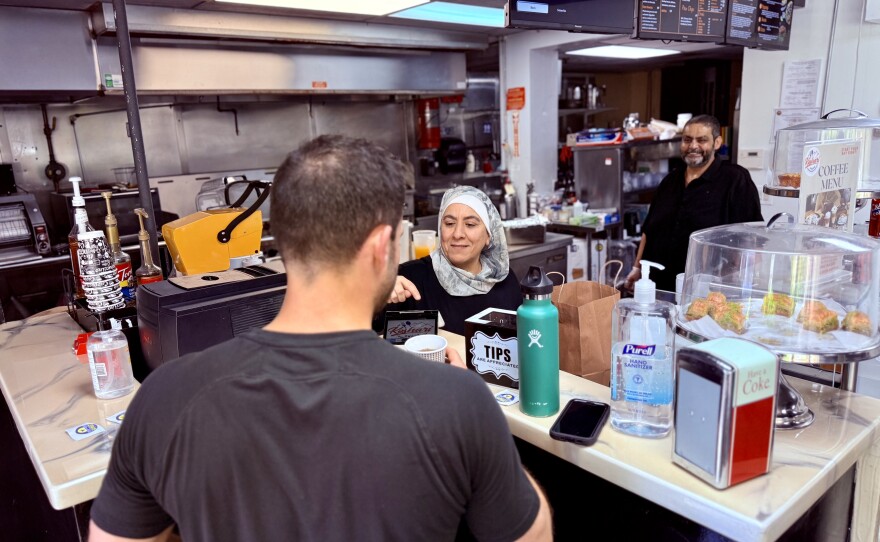


When Sewellam decided to open a brick-and-mortar location, his wife and son joined him in the kitchen, working alongside him to bring their family鈥檚 vision to life.
The halal restaurant offers casual, fast Egyptian street food like shawarma, thinly sliced roasted beef or chicken traditionally served in wraps or on platters, and hawawshi, a seasoned minced meat sandwich made with special Egyptian bread that Sewellam sources from New York and New Jersey to ensure authenticity.
And in order to make the food more relatable to his non-Arab clientele, Sewellam adapted the bowl concept.
"Here, it鈥檚 not so different for people. They鈥檙e used to eating bowls and building their own, so it felt like a natural fit," he said.
Warm atmosphere, bold dishes
A short drive southwest to Plantation, Amal Khallouke鈥檚 immerses diners in Moroccan culture with colorful fabric-lined walls and traditional d茅cor like Babouche slippers and kaftans.
In the kitchen, Khallouke鈥檚 mother prepares slow-cooked lamb tajine with apricots and prunes, a fragrant dish named after the clay pot in which it's cooked. It is served alongside couscous, a fluffy semolina grain, with five kinds of vegetables.


Meanwhile, her sisters manage the busy floor, creating a warm and home-like atmosphere.
鈥淢y restaurant tells a story as soon as you open the door,鈥� said Khallouke. 鈥淚 want you to sit down like you are home, not thinking about anything, enjoying a really nice meal, a drink, the tea, and having conversation. It鈥檚 not only about business. You feel like you鈥檙e coming home.鈥�
Khallouke has been living and working in Plantation since moving to the U.S. in 2002 from Rabat, the capital of Morocco, after winning the diversity visa lottery, a U.S. government program that gives green cards to people from countries with low immigration rates through a random selection process.
When her family joined her later, she recognized a gap in the area鈥檚 diverse food scene and decided they would fill it.
"We need a place that represents Moroccans ... especially here in South Florida, where you can find restaurants from everywhere in the world."
Khallouke emphasized that Moroccan food is 鈥渕ade with love and spices,鈥� and every dish showcases bold and unexpected flavor combinations, such as the bastilla, a savory pie filled with spiced chicken, eggs and almonds, topped with powdered sugar and cinnamon.
She explains that for many first-time visitors, the unfamiliar dishes can be a bit intimidating, but once they take the leap and try them, they鈥檙e often pleasantly surprised by the flavors.
鈥淭his is what life is about, to try something different," she said. "Why deprive yourself? Just try it! Maybe it鈥檚 something you鈥檙e really missing."
Keep up with South Florida's arts and culture scene by signing up for The A/C newsletter. Every Wednesday, the A/C will offer a curation of stories and deep dives that celebrate South Florida's arts community. Click here to subscribe.


